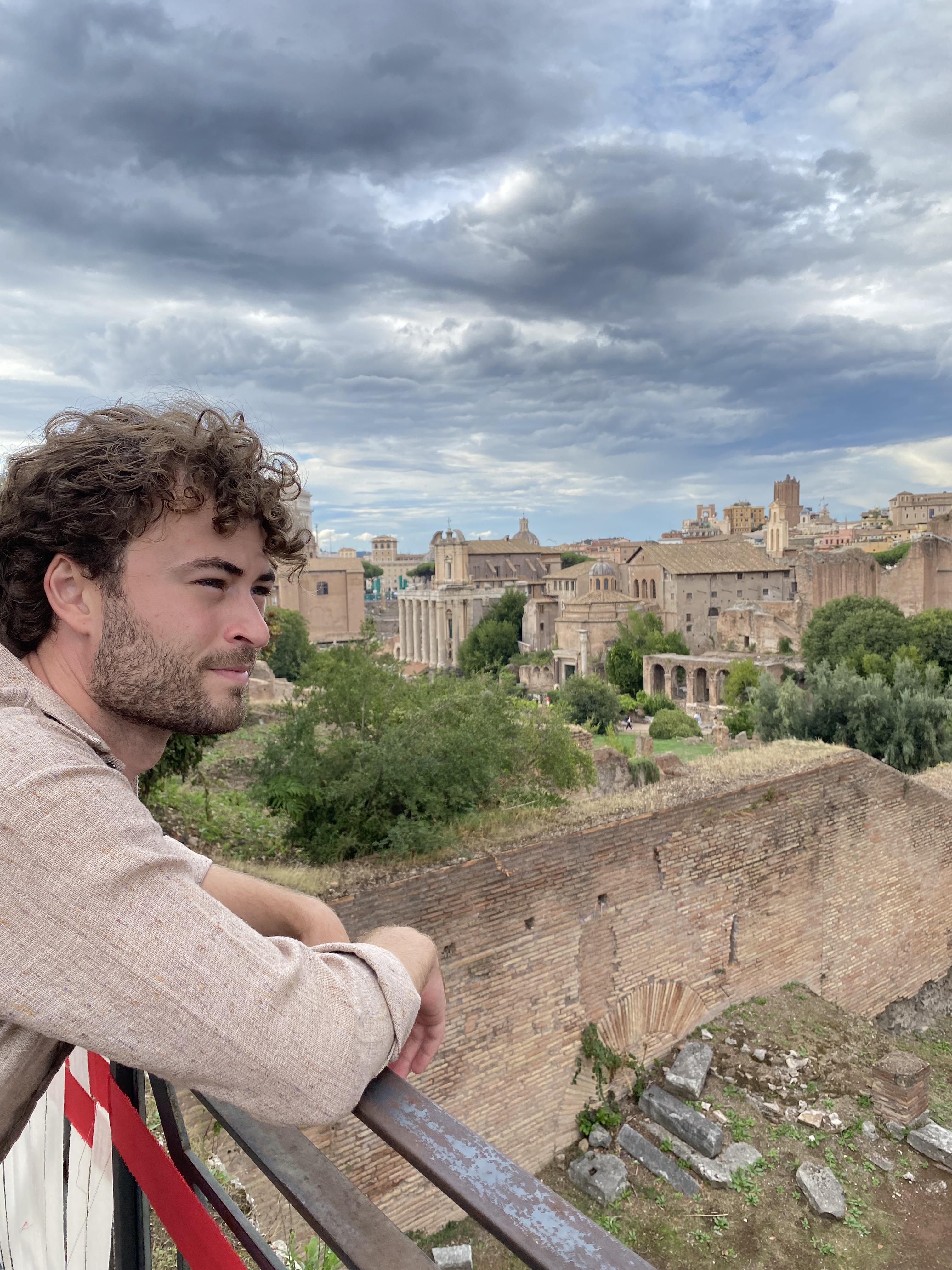
When you think of Australia, two landscapes typically make up the whole list: the beach, and the outback. Both are incredibly beautiful, and deserve all the recognition they have earned. However, Australia’s hidden gem lays out in the open right between the two. The Hinterlands. I was told by a German guy that the word hinter means back in German, I trust him and that’s all the explanation you’ll need.
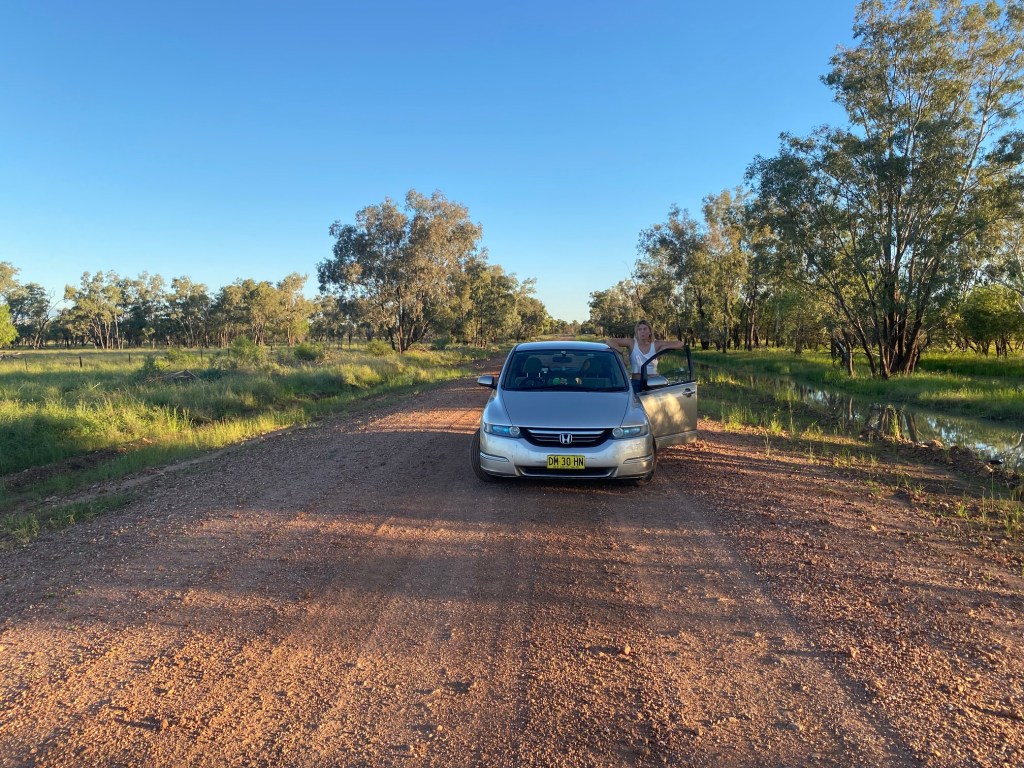

After working in Byron Bay for two months, my girlfriend Lara and I were ready to see something new. Considering how expensive flights were, we decided on a road trip. The only problem with a road trip was that Lara had already been north all the way past Cairns, we had both been south past Sydney, the ocean eliminates the route east, so that left us with the west.
Going west was unheard of in our world. Backpackers stay along the coast. Even when Cyclone Alfred came to town, all the travellers without permanent places to live chose to journey six hours south to safety rather than go two hours west inland. My Australian friends had only gone an hour and a half west to Tenterfield, no further.
This only made Lara and I more curious. We begged for time off, built a frame to support our mattress in the back of my Honda Odyssey, gave her some well deserved new brakes, and began to chart our course. When it came to deciding our destination, Lightning Ridge immediately captured our attention for obvious reasons. The pros: only nine hours away, natural hot springs, a healthy opal industry, and exciting stops along the way. The cons: honestly, we hadn’t considered any. Armed with that information, we set off on our loose plan: drive a few hours to Tenterfield, stop at Bald Rock, camp nearby, reach Lightning Ridge the next day, enjoy most of the day there, and return home with a day and a half to savour the road and each other’s company. Easy enough.
With one mattress, two bags of clothes, and three days’ worth of food, we set off ready to explore the hinterland. The trunk of my off silver (maybe champagne, but definitely not gold) van sagged. The tint my brother had installed on the windows protected our bed, which sat a comfortable two feet below the ceiling. This was supported by a half inch piece of plywood resting on two posts and the middle row of seats. The space beneath the plywood was accessible from either sliding door and the trunk; that’s where we stored everything else we thought we might need. I drove while Lara seemed to float next to me.
Our first stop was the bakery on the way out of town. In Australia, if you want food on the go, you have a meat pie. So we had two. The drive to Tenterfield would have been tedious if I hadn’t been surrounded by beauty. Around every turn there was another sight. We passed the kind of forests that make you disappointed in English for having only one word for “green.” Up and down small ridges, left and right around the bigger ones. Two more hours and we reached Tenterfield.
Lara went in to grab a few things for dinner; I snuck off and bought her a cowboy hat so she wouldn’t stick out too much in Lightning Ridge. Tenterfield was great. By this point we were used to living in a town that felt themed after a western movie, flat wooden façades hanging over the sidewalk, bars with swinging split doors, hand painted signs. In our temporary home of Bangalow we knew this was a disguise, but in Tenterfield it felt real.
First we stopped into what would have been an antique shop anywhere else, but here, as a testament to Tenterfield’s age, it was a thrift store. Almost everything in that store was older than our parents. We joked about trying on ridiculous Aussie army uniforms and flipped through world history books that Rudyard Kipling would have been proud of. Lara made fast friends with the cashier, and after hearing our plans the girl invited us to sleep on her family’s property that night. My immediate reaction was to politely refuse, though she said we could change our minds anytime, they probably wouldn’t even notice we were there. We thanked her profusely, and I bought the newest book in the store: a 2008 Aussie travel guide.
Lara and I walked the quiet streets. The warmth of her hand in mine was a comforting contrast to the bite of the cold winter air. This was the first time either of us noticed the elevation we had gained, and we still had a steep hike ahead. Among other things, I remember talking about the cashier’s kindness and why my instinct was to refuse even though she clearly meant it. I think it’s just my cold Seattle upbringing. I admired Lara’s willingness to accept, thinking that’s how friendships and communities start, and wished my own instincts were different.
This conversation carried us to a small church on the edge of town. It had the simple beauty every country church should have, along with a few lingering congregation members who were delighted to be temporarily entertaining a German. The sound of holy music drew us round to the priest playing a ukulele; we had a good laugh and moved on.
Next we climbed Bald Rock. Signs around the park claimed it was the largest monolith in the southern hemisphere. Australians do love comparing themselves to the rest of the southern hemisphere. Anyway, it was a mighty big rock: one continuous piece of granite that took at least thirty minutes to reach the top of. Small patches of forest dotted the summit, home to wallabies, birds, and surely some infamous snakes and spiders. At times we had to use our hands; there were no ropes or rails, only footholds worn smooth by everyone who had climbed before us.
I will never forget hauling myself over the last few Sisyphus style boulders and finally reaching the top. Dense, lush green jungle stretched out as far as the eye could see. The only breaks in the topography were some Dr. Seuss looking hills to the west, which made the whole scene feel like Land of the Lost. We sat and admired the view from every direction while the sun set slowly. Lara and I took silly photos pretending to be squished by giant rocks, then began the descent, much more tedious than the climb. With each heavy step I left my own small contribution to the trail, making it that little bit easier for the next person.
For dinner Lara made us sushi bowls. I was skeptical at first, but after a long day it was perfect. Rice, canned tuna, seaweed, mayo, and (for me) hot sauce. It was by far the most elaborate meal we’d made on the trip, and it paid off every time. We ate our sushi in the dark, glad to be next to each other, glad to be in the middle of nowhere, and glad we had only one pot and two bowls to wash.
This is where the real adventure began. Although it was completely dark, it was only about 8 p.m., so why not save a couple of hours tomorrow and keep driving tonight? In minutes I was back to dodging dead kangaroos while Lara crocheted. After fifteen minutes we lost phone reception; after thirty I was sick of the Australian speed limit (equivalent to 60 mph); and after about forty five minutes or so I heard a strange noise, like a rock stuck in the wheel well that suddenly shot out.
When I pressed the brake pedal I realised there was no rock at all, and definitely something vital to the car had failed. The front right wheel seized so violently I could only pull halfway off the road. We were on a hill and the van wouldn’t even roll in neutral. At first I feared the engine had died, but we soon discovered the brake caliper had fallen out of place and wrapped itself completely around the rotor. (Those words had only recently entered our vocabulary thanks to the DIY attitude I’d picked up from a friend.) Thankfully, this meant Lara and I theoretically had all the tools we needed to fix it, except spare parts.
First we removed the bed, then the plywood, then our bags, until we could finally reach the tool kit.
In my head flashed the repairs I’d done in the days before. I had changed the front rotors during a torrential downpour so we could leave early. It seemed my eagerness had turned into carelessness.
We took a moment to collect ourselves. Even without much moon, the stars were bright enough that I could see every detail of Lara’s face: the scar behind her left eyebrow, the freckle on the tip of her chin, and (most importantly) the twinkle in her eye that said she still had hope. Please don’t let her down.
For what must have been the fifth time that week, I got out the emergency jack and started cranking up the right side. Slowly, patiently, carefully, the front of the van lifted. Being stuck between the highway and a shallow ditch on a hill was far from ideal. That slope is what finally did us in, but not quite yet. I had a few more turns of the jack handle left when the van simply became too heavy for its precarious perch. If I’d blinked I would have missed it: the Honda lurched forward and then stopped in mid air. The jack had fallen with it, twisted ninety degrees, and punched straight through the asphalt, wedging itself firmly between car and earth. If it moved now, the front of the van would drop another foot. It didn’t look likely to move, though; it had penetrated both the car and the road. I had no tool for this, and no plan. For the first time in Australia, I felt truly at the mercy of the country. What did she have in store for us?
I apologised profusely to Lara, this was my fault, after all. She knew we were stranded, yet with that same sparkle in her eye she said, “It’s okay, we’re both all right. That’s what matters, and we’ll get out of this somehow.” She even claimed partial responsibility, saying she was bad luck for cars, not two months earlier she’d been in an almost identical breakdown with her friend Helene. I told her that even if she brought bad luck to vehicles, I’d always want her with me because of the extraordinary luck we had together everywhere else. And it was true: we’d seen sharks, scored preferential treatment at the hostel, had beaches to ourselves, received wonderful compliments and random discounts, you name it. Life was simply easier together.
So we sat with those thoughts. What else could we do?
Whether it was the bend in the road, the claustrophobic wall of pine trees, or the chatter of night animals, we didn’t notice the headlights until the truck was right beside us. It was a big white Suzuki with a winch on the front and a steel tray on the back, where I’m from it would have been a Ram, the kind that multiplies the moment you leave the city; where Lara is from you’d probably never see one at all. The roof mounted spotlight hid the driver’s face. A thick Australian accent rolled out the window: “How you going, mate?”
“Could be worse,” I squinted back.
The door swung open and a man with more on his mind than introductions stepped out. Decades of manual labour showed in a stiff back and reluctant knees. Brown leather boots, freshly ironed jeans, plaid flannel tucked neatly into a brown leather belt. A wide smile revealed several missing teeth, thick glasses framed stubborn white hair. A young seventy, I guessed.
I explained our mess while he surveyed it, clearly more interested in what he could see than what I was saying. Without much preamble he announced we’d need at least two more jacks, some blocks, and a whole lot of luck. He’d run home to fetch the first two; Lara and I would have to supply the luck we’d come to take for granted.
As he climbed back in I offered our names. “Sorry mate, I’m Bob.”
In the thirty minutes Bob was gone, Lara and I invented every possible horror movie scenario. He returned exactly as promised, with two jacks, plenty of blocks, and industrial work lights. We tried to help, but Bob was the kind of man who prefers to do things himself (understandable given the state of the van). He slowly warmed to us, explaining he was a semi retired local heading home to his farm after a beer at the pub. (They always drink at “hotels” in Australia.) We traded stories. I grew nervous when he asked my opinion of Trump, had we been in America I might have lied to keep the flannel clad saviour happy, but I told the truth and it turned out Bob hated the man too. We bonded over Trump’s insanity, then Bob took a keen interest in Lara’s story. As the van stabilised he suggested we drive the forty five minutes back to the nearest town and see if the mechanic could help in the morning.
Another ute stopped to offer assistance, but Bob waved them on, we’d be right soon. Finally we examined the brake that had stranded us. Both bolts holding the caliper were missing. By some miracle, or Lara and me luck, one bolt was still lying in the wheel well. Bob fashioned it temporarily into place and warned me to avoid braking entirely and drive as little as possible. We were incredibly grateful, resigned to turning around yet elated not to be sleeping in a ditch.
Then, who knows why, Bob invited us to spend the night in his yard, only ten minutes away, and said he might have another look after breakfast. Without a second thought we both said yes. We would, after all, be sleeping in a stranger’s yard.
I followed him, rolling more than driving, down the hill, around another, and into the valley he called home. Bob invited us for breakfast, told us to be up early, and pointed to park beside the fire shed. (I later learned a fire shed is where the community keeps the fire truck, firefighting is a shared responsibility in Bob’s valley.) Clouds had rolled in so we couldn’t see much. There was one illuminated phone booth across the road, so I grabbed some coins, looked up my brother’s number, and went to explore. My first (and probably last) phone booth experience made me uncharacteristically grateful for my iPhone: more flies than anywhere that isn’t actual poop, and (of course) out of order. At least I learned the name of Bob’s tiny town, Mingoola.
Should you look up Mingoola, the first image you’ll see is a road that ends in a creek. You’ll learn its distant relation to other small places, and discover that at the last census Mingoola had exactly eighteen residents.
 Samuel Jett Centioli Jr