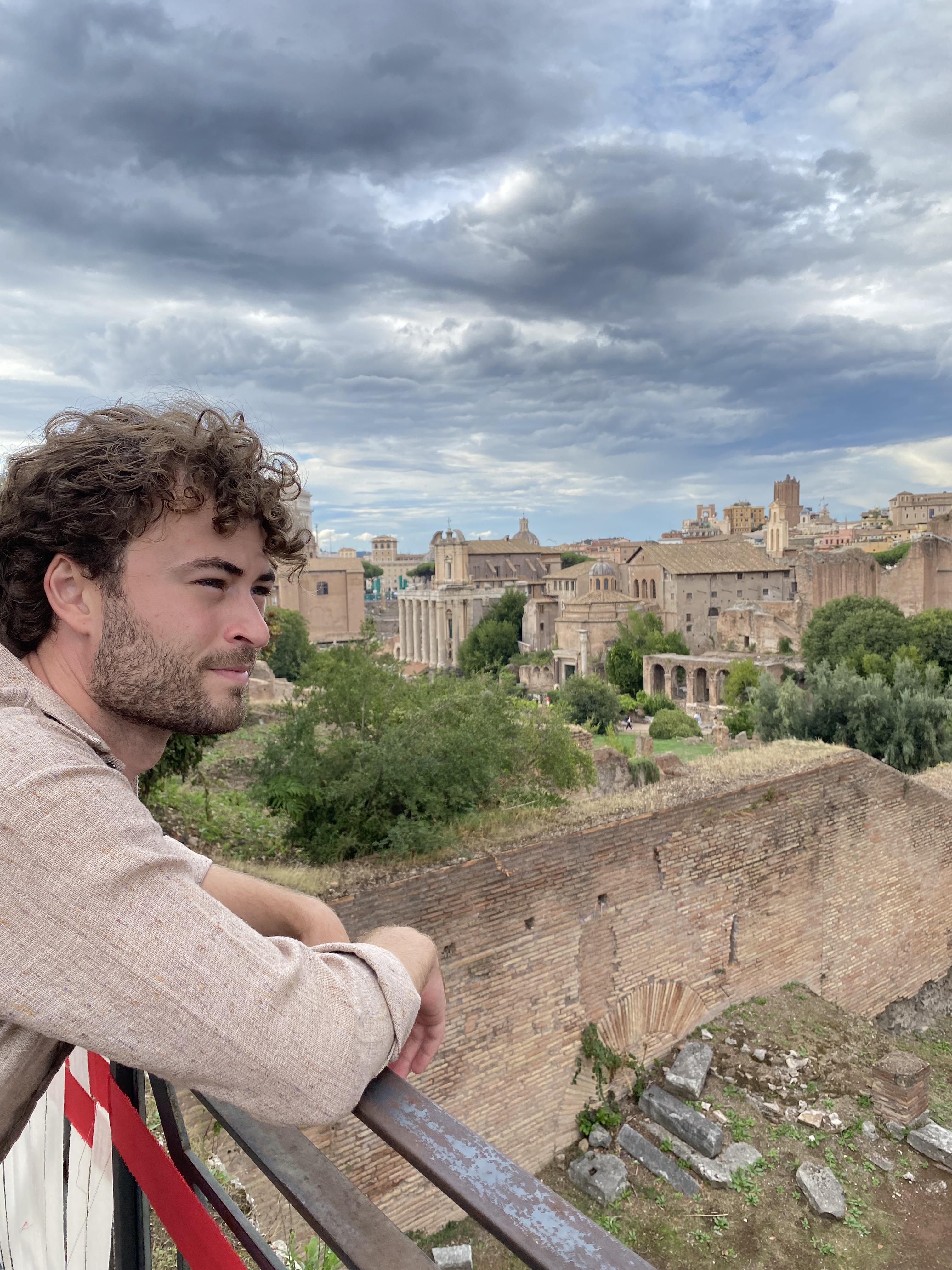

What do you want from your travels? Whether your answer has more to do with pasta, parties, or prayer, tourism as you know it is about to change.
Our past mistakes have put us on the cusp of a global paradigm shift. Today we must acknowledge the damage that unrestricted development has done to the environment and to our communities. We must realize that it has dictated how we travel for far too long. The industry’s future depends on finding a four-pillar symbiotic relationship between tourist, capitalist, local, and environment. Only this can salvage the natural beauty and unique culture of the world’s great destinations without removing tourists completely.
Fortunately, this transition does not need to be complicated. In fact, a roadmap is already being drawn by communities, governments, NGOs, and corporations across the world. Degrowth and sustainable accountability are the main philosophies inspiring the leaders in this movement. Given modern technology, we are fully capable of fixing this issue.
First, I want to establish why the tourism industry must change. After all, tourism accounts for about 10% of global GDP and employs 1 out of every 10 people on Earth.1 Undeniably, we are living through the peak of its capital success. Though we are simultaneously living through the worst of tourism’s failure.
- Tourism accounts for 8% of global carbon emissions annually, with an estimated significant portion from air travel.2
- A single long-haul flight from New York to Paris emits roughly 1.6 metric tons of CO₂ per passenger. This is more pollution than many low-emission countries produce collectively over decades.
- Plastic waste from tourists contributes substantially to coastal marine litter.
- The WWF estimates that tourism-related activities, including construction, have contributed to significant coral reef loss worldwide.3
- The average hotel uses hundreds of gallons of water per guest each day, far exceeding typical household usage.4
- Were this not bad enough, the industry reduces the quality of life for locals worldwide. As tourists come, so do inflation, gentrification, and extreme congestion.
- Venice, Barcelona, and similar cities often see dozens of visitors per resident each year. This has driven up Venice housing prices dramatically compared to the rest of the region.5
- Additionally, about 80% of the world’s tourists visit just 10% of the world’s destinations.6
Though it may not seem like it, there is hope. The first step is realizing what unrestricted capitalist growth has done to our planet. Going forward, we cannot chase profits and expect different results. Once we agree that success will not be measured in currency, we can work toward setting goals that reflect our modern ambitions.
In essence, this is Serge Latouche’s degrowth theory. He has advocated such ideas for decades, and over the years some important destinations have taken notice.7
Degrowth is embodied in policies such as Barcelona’s restrictions on short-term rental services like Airbnb, Amsterdam and Milan’s caps on hotels and restaurants, Bhutan and Kyoto charging fees to enter or reside, Venice and Machu Picchu’s caps on daily visitors, or even France restricting local flights.
The common thread between all these policies? Simply put, they limit tourists in specific areas. Yes, these policies reduce profits, but no, the local economies have not collapsed.
Additionally, reducing the number of tourists should help lower the cost of living. This has not materialized yet, but we should still be hopeful as many of these programs are young.
However, should we need to look in another direction to support locals facing dramatic inflation, Uganda has a great solution. Since the 1990s, the Ugandan government has shared revenue from gorilla tourism directly with local communities, often allocating portions to build schools, hospitals, and utilities.8 This direct investment has benefited the communities greatly. Sometimes the answer does not have to be complicated.
Degrowth is not the only model one can look toward. Governments across Europe have decided that tourism should benefit more than just their city’s GDP. To incentivize prosocial behavior, Copenhagen has launched an app, CopenPay, that rewards tourists who clean up garbage and travel by foot or public transportation. In return, they get free coffee, beer, kayak rides, and more.
In Bremen, Germany, travelers who arrive by train are rewarded with a local goodie bag with treats and coupons to beloved local staples. Berlin is in the process of rolling out a program to reward those who eat plant-based meals, travel sustainably, and shop locally with free museum passes and other perks.
These are all great low-cost methods to reframe what tourists can be to a city. Look for programs like these to begin in all major cities and take advantage!
The most visible sign of change is likely to be how and where we vacation. Given the overtouristed state of our most popular destinations, governments and organizations have been working hard to provide alternate destinations. Crucially, this includes investing in activities that will cause new destinations to appear. I specifically mean spending quality time with locals, learning about their culture, and enjoying a more adventurous environment rather than flocking to different photo ops, their surrounding gift shops, and touristy restaurants.
In Nepal, hundreds of thousands of tourists come each year to see Mt. Everest. During peak season, the trails are packed to the point of misery, and the local infrastructure is completely overwhelmed. Community Homestays Network Nepal saw this as an opportunity to promote these thrill seekers a different part of the country, as only kilometers away there are trails with similar beauty, relatively empty.
Even better is that the organization has partnered with dozens of local women to start a backpacking homestay trail. Should one join as a tourist, they will experience Nepalese culture in a way that is impossible on the typical route. Should one join as a host, they could make more than was possible prior to Community Homestays Network Nepal. Some women have used this to send their kids to college, retire their partners, or enjoy the modern luxuries of life in a place that typically does not get to. This model has been a great success and is already being replicated in countries across the globe.
The New Zealand government invests millions in tourist organizations that promote travel to less popular destinations. The Maori Pounamu Pathway has so far been the most successful. Your vacation here would be spent slowly going from town to town in New Zealand’s least populated west coast region. You may see museums built around live rivers, become immersed in Maori culture on guided hikes, or even be blessed by a virtual elder. Most importantly, the emphasis is on culture and spirituality, not consumerism and shopping.
Platforms like Worldpackers and Workaway turn tourists into volunteers. One can teach a language, learn to farm, or even do the dishes at a remote yoga retreat. The opportunities with these platforms truly seem endless. Just read these headlines: “Experience Tea & Taoism with Hill Tribe in Northern Vietnam” or “Live and Create in Paris! Looking for Creative Social Media Help.”
Aside from the benefit to the community and the reduced dependence on tourist infrastructure, these programs are great because they foster meaningful connection between locals and travelers. In my experience, when locals see travelers investing their time in the community, they will embrace them. To me, this is what traveling is all about.
I have noticed that volunteers typically increase the length of their stays in a single location. This typically reduces city hopping as well. Mind you, these services offer experiences far and wide, drawing travelers to parts of the world they otherwise would have missed. All these qualities are much more sustainable ways to travel than their more common counterparts.
Lastly, a trend we may not see but definitely will notice comes to us via artificial intelligence. Local governments across the world have begun using hyper-realistic models of their cities to monitor every possible datapoint. This technology is referred to as a digital twin city, and it is just that. They model population flow, spending trends, weather patterns, and so much more. Dystopian beyond even Orwell’s imagination, though utopian in mine.
Now I am not involved in enough confidential conversations to predict the full consequences of this technology. However, I am confident that when managed properly, it can be used to tame crowds at popular sites, reduce traffic, and change the way we tour cities.
Representatives of Amsterdam used their digital twin model to predict how a flux in hotel prices would affect attendance at popular tourist sites. Their predictions were quite accurate. Therefore, when used in collaboration with local businesses, a city may be able to keep attendance at a pleasant number without having to turn tourists away. Imagine visiting the Colosseum without being stuck between a herd of strangers. Sounds wonderful, right?
With years of data on traffic patterns and the capability to control lights and road closures, Singapore predicts that digital twin city technology will exponentially reduce street traffic as well. Even if you do not travel, that is great news.
Finally, the potential for museums using this astounds me. Digital twin city technology is being turned into attractions. Think, I have just entered the art piece. Not only could this be incredibly interesting, but it may work to alleviate overtourism at key museums and monuments by providing alternate VR viewing points.
While researching the digital twin city model, I was reminded about just how little we know of the future. The options I have presented are by no means the only tools toward a sustainable tourism industry. However, degrowth is the path to a sustainable tourism industry. Please look long and hard at the motives of anyone who tells you otherwise. We should not expect the current tourism hegemony to accept this change willingly. Billions are on the line. Luckily, we do not need their permission to change course. The power is in our hands solely as consumers. The real cost of excessive flights, Airbnbs, and hotels is the damage inflicted on our environment and local communities. Please keep traveling, but do it with this in mind.
References
- World Travel and Tourism Council. Economic Impact Research 2024–2025. WTTC, 2024.
- Sustainable Travel International. Tourism and Global Carbon Emissions. Sustainable Travel International; Nature Communications, various studies.
- World Wide Fund for Nature. Tourism Impacts on Coral Reef Ecosystems. WWF reports.
- Pure Blue Sustainability and related sources. Hotel Water Consumption and Resource Use in the Hospitality Industry.
- Holidu and local municipal analyses. Overtourism and Housing Impacts in Venice and Comparable European Cities.
- United Nations World Tourism Organization; National Geographic. Global Tourist Distribution and Concentration Trends.
- Latouche, Serge. Degrowth: A Vocabulary for a New Era and related writings on degrowth theory.
- Uganda Wildlife Authority. Tourism Revenue Sharing Program and Community Development Outcomes.
 Samuel Jett Centioli Jr